

Signs of genuine artisan craftsmanship
Table of Contents
- What genuine artisan craftsmanship looks like
- How to identify handmade furniture through tactile details
- A handcrafted furniture quality checklist
- Questions to ask when buying handmade furniture
- Handmade furniture versus mass-produced furniture
- Checking maker provenance and sourcing
- Why imperfections matter
- Frequently Asked Questions
Last Updated: October 19, 2026
What genuine artisan craftsmanship looks like
When you run your hand across a handmade bowl, you're touching hours of thought. Real artisan craftsmanship leaves traces: slight variations in thickness, a glaze that pools deeper in one corner, the maker's hand visible in small imperfections that prove nothing was mass-produced. At Extraordinary Emporium, we curate pieces where the maker's hand is visible.
The difference between handcrafted and factory-made furniture starts here, not in the price tag, but in what you can actually see and feel. A piece made by hand carries the rhythm of its making. Machine-made pieces carry efficiency.
This matters because you're choosing what lives in your home. When you understand what genuine artisan craftsmanship actually looks like, you stop guessing. You know.
How to identify handmade furniture through tactile details
Run your fingers across the surface. This is where real handcrafted work reveals itself most honestly.
Surface texture and finish
Handmade pieces feel different because they're finished by hand. A glaze applied by a maker's brush won't be perfectly uniform, it'll be thicker in some places, thinner in others. You'll feel the slight ridges where one pass of the brush overlapped another. This isn't careless work. It's the signature of care.
Machine finishes aim for consistency. Hand finishes aim for character. When you touch a handcrafted ceramic bowl, you might feel a small bump where the glaze pooled, or a slight roughness where the maker sanded by hand rather than with industrial sanders. These details tell you someone stood there, making decisions about this specific piece.
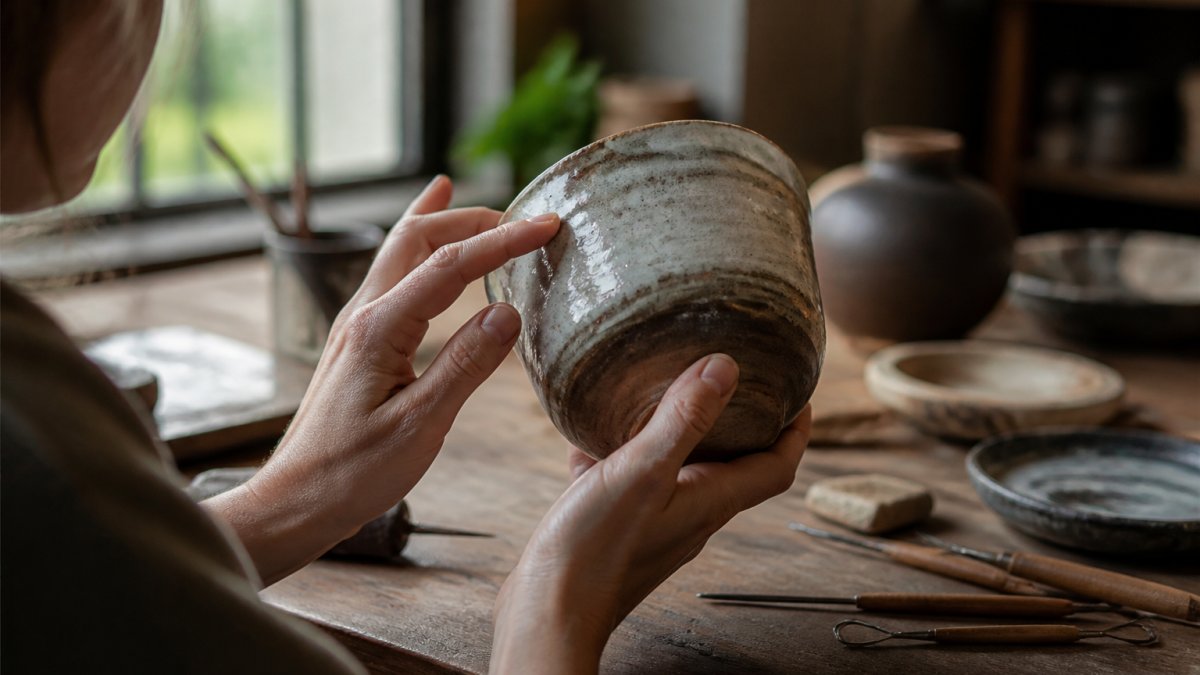
Look for consistency in the finish. If every piece in a collection looks absolutely identical, that's a signal of mass production. Handmade work varies slightly from piece to piece. The glaze colour might shift slightly. The texture might feel different on one side than the other. This variation is what you're paying for, it means a person made it, not a machine.
Grain and wood character
Wood has a story written in its grain. Handcrafted furniture often features wood chosen deliberately. Makers work with the grain rather than against it, which means the grain pattern you see isn't hidden under a thick stain or veneer.
Run your hand along a wooden piece. Does the grain feel natural to the touch, or does it feel like a photograph printed onto the surface? Real wood grain has depth. The wood itself is slightly raised and lowered by the grain pattern. Veneer, a thin layer of real wood glued to plywood, can feel flat because it is.
Solid wood furniture made by hand often shows the maker's choices. Boards are selected to complement each other. Knots and colour variations become part of the design rather than problems to hide. This is why two handmade wooden chairs won't look identical. The maker worked with the material, not against it.
A handcrafted furniture quality checklist
When you're evaluating whether a piece has genuine artisan craftsmanship, move through this checklist. You don't need every mark, but real handmade work will show most of them.
- Visible hand marks or tool marks: Small variations, slight asymmetry, evidence of hand finishing
- Material choice visible: Solid wood grain, natural stone variations, clay colour showing through glaze
- Consistent but not identical: Similar pieces vary slightly from one to another
- Joins and seams: Visible craftsmanship in how pieces fit together, not hidden under filler
- Weight and balance: The piece feels substantial, made to last
- Finish imperfections: Small bubbles in glaze, slight colour shifts, texture variation
- Patina potential: The material will age visibly and beautifully
- Maker information available: You can find out who made it and how
A handmade ceramic dinner plate from Ribera Handmade Ceramics, for example, shows these marks clearly. The 23cm Saltfoam Stoneware Handmade Ceramic Dinner Plate is finished with a high-grade food-safe glaze. You'll see slight variation in the glaze colour and thickness. The plate is dishwasher-safe and made from high-quality stoneware clay, shaped and glazed by hand. That's artisan craftsmanship you can verify.

Questions to ask when buying handmade furniture
Before you buy, ask the seller these questions. Their answers will tell you whether you're getting genuine handcrafted work.
How is this piece made? Listen for specific detail. A real maker can describe their process. They'll mention tools, techniques, materials. Generic answers like "carefully crafted" or "made with love" aren't enough. You want to know whether it's hand-carved, hand-thrown, hand-finished, or a combination.
Is this solid material or veneer? For wood, ask directly. Solid wood ages differently than veneer. Both can be beautiful, but they're different. Know which you're getting.
Will this piece vary from others in the collection? If the answer is no, question whether it's truly handmade. Handcrafted work varies. That's part of what makes it valuable.
How long does one piece take to make? This gives you a sense of labour involved. A hand-thrown ceramic bowl takes different time than a carved wooden sculpture. The time investment is part of what you're paying for.
What happens if something breaks? Can the maker repair it? Can you replace a single piece if needed? This matters for long-term ownership of handmade work.
Where are the materials sourced? Ask about wood origin, clay sourcing, finish materials. Makers who care about their work know where their materials come from.
Large Saltwater Lavender Handmade Ceramic Stoneware Dinner Bowl →
Handmade furniture versus mass-produced furniture
The practical differences matter when you're choosing what to live with.
Handmade pieces are made in smaller batches, often one at a time. This means higher labour cost per piece, which is why the price is higher. But it also means techniques can be adjusted, and work can improve over time. Mass production aims for volume and consistency. Once the design is set and the machinery is running, changing anything is expensive.
Handcrafted furniture shows its age in character. A wooden table made by hand will develop a patina, a subtle darkening and mellowing of the finish over years. This is beautiful. Mass-produced furniture often shows age in wear and deterioration. The veneer peels. The finish cracks.
When something breaks in a handmade piece, it's often repairable. A wooden surface can be refinished, a ceramic re-glazed, a joint tightened. Mass-produced furniture is often designed to be replaced rather than repaired. The cost of repair often exceeds the cost of a new piece.
Handmade work carries provenance. You can often find out who made your piece, where they're based, what their process is. This connection is something mass production can't offer. It's also something you can verify. When you know the maker's name, you can research them.
Checking maker provenance and sourcing
Before you commit to buying, do your research. Genuine artisan makers are usually happy to share their story.
Look for specific information. A genuine artisan often has a website, social media, or a shop page that explains their process. They may show their studio or workspace. They explain where their materials come from. They're transparent about what they do.
Ask for evidence. Extraordinary Emporium works with makers like Ribera Handmade Ceramics, whose work you can verify through their production details and design credits. When you buy from Extraordinary Emporium, you're buying pieces where the maker information is confirmed and available. You can see the maker's name, their techniques, and often their location.
Be cautious of vague claims. "Artisan-made" and "handcrafted" are words that get used loosely. Look for specifics: hand-thrown, hand-carved, hand-finished. Look for the maker's name. Look for detail about their process. If a seller can't give you specifics, that's a signal.
Check whether the artisan is accessible. Can you find information about them with questions? Do they share details? Genuine artisans often love talking about their work. They're happy to explain their techniques, discuss customisation, or share their story. This accessibility is part of the value.
Why imperfections matter
A perfectly smooth ceramic glaze with no variation is a sign of industrial production. A glaze that pools slightly in the base, that has tiny air bubbles, that shifts in colour from one side to the other, this is handmade work.
These imperfections aren't mistakes. They're evidence. They prove a person made this, not a machine. They prove the maker was present in the making, making small decisions about each piece rather than following a preset program.
Imperfections also mean durability. When a wooden surface is hand-finished, it's often worked with the grain, understanding the wood's structure. The finish tends to last longer because it's applied with knowledge of how this specific piece will age. Machine finishing applies the same process to every piece regardless of the wood's character.
The small variations in handmade work also mean your piece is genuinely yours. It won't be identical to anyone else's. When you live with handcrafted furniture, you're not living with something mass-produced. You're living with something specific, made once, for people who value that specificity.
When you're choosing furniture for your home, knowing what genuine artisan craftsmanship looks like changes everything. You stop accepting vague marketing language. You start asking real questions. You understand that the higher price isn't just about exclusivity, it's about labour, skill, and materials chosen with intention. Extraordinary Emporium curates handcrafted pieces where you can verify the maker, understand the process, and see the marks of genuine craftsmanship. Explore the collection and find pieces that bring that intentional character into your home.
Frequently Asked Questions
What are the signs of genuine artisan craftsmanship?
Genuine artisan craftsmanship shows itself through careful joinery, visible wood grain or clay character, and a finish that's been hand-applied with attention to detail. Look for slight variations between pieces, tool marks that suggest hand-work rather than machine precision, and materials sourced with care. Makers who work by hand often leave subtle evidence of their skill: grain that runs naturally through wood, glazes that pool slightly in ceramic pieces, or joinery that's been fitted rather than mass-produced. Each piece should feel considered, not identical to ten others.
How can you tell if furniture is genuinely handmade?
Handmade furniture rarely looks factory-perfect. Examine the underside and joints for evidence of hand-finishing rather than machine sanding. Ask the seller directly about the process, how long the piece takes, and whether items are made to commission or in small batches. Information about the workshop or studio may be available. Sellers of genuine artisan pieces are usually keen to explain their methods. Check whether the wood grain or ceramic pattern is unique to that piece, mass production creates identical repeats. Ask about the tools they use and whether they finish each piece individually.
What should I look for when buying artisan furniture?
Start by examining the materials: solid wood rather than veneer on visible surfaces, high-quality clay or textiles, and finishes that feel substantial. Check the joinery, dovetails or mortise-and-tenon joints suggest skilled hand-work. Ask about durability and care. Look for a maker's mark or signature, and request information about where materials come from. If ordering online, ask for detailed photos. A genuine artisan's details are often transparent about their process and timescales.
Should handmade furniture have small imperfections?
Yes. Small variations in colour, slight unevenness in hand-applied finishes, or minor surface marks are hallmarks of handwork, not flaws. Machine-made pieces look identical because they're produced from a mould or template. Handmade items will differ slightly from one another, the wood grain won't match exactly, a glaze might pool differently, or a weave might show natural variation. These marks prove the piece was made by a person, not a machine. However, structural flaws, poor joinery, or unfinished edges are different, those suggest carelessness rather than craftsmanship.